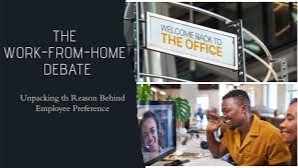
WFH? RTO? Hybrid?
While I have a ton of technical content and topics to put out to the wider LinkedIn community to debate, this is a topic that affects a much broader audience in the office work space. Yes, I know I am adding yet another article to the gazillion out there and while I have been outspoken on other articles / posts, I have decided to write my own article.
So—WFH? RTO? or Hybrid?
Which is it for your business? More importantly, why that decision?
Now my next point—why is this such a widely debated discussion? I cannot believe the amount of effort that is going on not just around Australia but the globe about this very topic. I am seriously flabbergasted. These same organisations calling for a return to office (RTO) are claiming that work from home (WFH) doesn’t work, the privilege is being abused, and so on. One question then—how did your organisation survive the pandemic when there were significant lock downs? Did your office staff all keep working? A lot of organisations found this to be the case because the technology exists to allow for this. TBH—the technology to accommodate this has been around for some time yet a lot of us all still followed this principle of coming to a central place more often than not to do our work. So if this worked for the better part of 2-3 years, why all of a sudden is this work practice broken? Here is the truth—it isn’t. So does the age-old saying ‘if it ain’t broke, don’t fix it’ apply?
Let’s have a look at some of the reasons why employers want staff back in the office either part time or full time.
Can’t see what work my staff are doing—this appears to be a big reason why employers are wanting staff back in the office. I also notice from articles I read that the majority of C level execs putting in this mandate are Boomer execs. Could this be a generational gap thing? You know what—possibly. WFH I can imagine for most Boomers is a semi-foreign concept and they wouldn’t have been exposed to this as an option until well into their careers. They seem to be of the mindset ‘I need to see you working and you all need to be in the same place to work together efficiently’. The truth is this isn’t the case. I challenge any employer out there who has mandated RTO to walk around their office right now and tell me exactly what every employee is doing at their desk right now. Go on … let me guess—you can’t. You can see people at their desks but you really don’t know what they are doing, do you? How many are not at their desks and congregated in a group in a certain part of the floor? They must be collaborating right? Well, maybe … they could also be talking about where to drink after work, the football game they watched the night before, ‘have the you seen the latest episode of The Walking Dead?’, and more. I have worked in many an open-plan office and, more often than not, people are socialising, not collaborating. Sorry, but it’s the truth. If you get a whole lot of people together who know each other, they are going to talk and not always about work—humans are social creatures so you won’t stop this.
Now, I see these same execs say they will get some tools installed into the environment to monitor people’s work and output. Hang on, you are not supportive of technology for remote work BUT you want to use technology to monitor staff work? Have you heard of hypocrisy? Look it up in the dictionary.
This also speaks to trust issues. The staff hired were hired not just for their skills but for what was seen as the right fit for your organisation. If they were the right fit then trust them to do the work. If you don’t, you need to look inwards at a much larger problem. People hate micromanagers and mandating majority or full-time RTO with no staff buy in oozes this. I would even go as far as to say there is a degree of narcissism at play here with people wanting to look out over their empire of staff—seriously, grow up.
People can’t collaborate online at all. They need to be in person—this is simply not true. With the right unified communication tools, you can actually have a successful collaborative session online. I say to all the national and global companies that come together for important workshops and meetings—if people need to be in person for you to collaborate, do those not working at the desired location for the meeting fly in so they can be in person to collaborate? No? So why does it matter if people are remote sometimes who are locals to the office? Now I do agree that depending on the type of meeting and workshop, this can be better in person but this is not the case all day every day. To my point above as well, when everyone is together in the office, they are not always collaborating and most of the time socialising. I will tell you what, when trying to work on something in an open-plan office and you have people talking about Game of Thrones next you, it is very hard to concentrate.
If you don’t RTO, you will receive pay cuts and not have the same promotion opportunities—sorry, what? Is that even legal? Have these people not heard about discrimination? I can’t even believe that statement has been put out in the public forum.
WFH home impacts employee mental health—ok, I will give this statement some credibility. However, does it not depend on the role as well as the individual? Some people maybe happy working like this for the most part but I can see how this could impact some people. Again, it comes back to the point of when in-person interaction is required.
We cannot monitor employee output when they are remote—again, what? This is one I really don’t understand. How can you not monitor employee output? Any employee has a job to do with specific tasks they need to do everyday. If they are not doing their job and off playing golf regularly, surely a line manager will notice this very quickly. If they aren’t, doesn’t this speak to the competence of the manager? Also, how in touch with their team are they? Do they also have trust issues with their team? This point is not an employee issue—it is an employer issue. If you don’t know an employee’s output when they are WFH, you are not going to know it when they RTO—the end.
Employee choice—not one that I have seen come from employers, but one I have added here: instead of enforcing your own beliefs on employees, how about giving them a choice? This way of work was in place for several years and it worked! So why revoke it with no employee buy in or even giving them a choice in the matter? A lot of employees are saying their work-life balance is much better with hybrid arrangements or completely WFH. Now that people have experienced this in the ultra busy world we live in, they will not let go of this easily.
What is the utopian answer? I actually don’t know but what I do know for my company is a de-centralised ‘work from anywhere’ model works for us but we also attend customer offices to do work for them onsite regularly, particularly if they are a new customer. Why? To build new customer relations—that is important. However, I don’t care where my staff work as long as the results I expect from them are being achieved. I will know very quickly if they are not doing the right thing but I trust them to do the right thing. You know what? They do just that and they are happier having a choice. Employers who mandate full RTO—I hate to break it to you but you are going to have a massive talent drain and I personally will be on the lookout for talent looking for a flexible yet challenging environment for a company that believes in them and trusts them.